Office Clearance in Bounds Green

Office clearance in Bounds Green should be straightforward, orderly and suited to the realities of working premises, whether you are dealing with a single room, a full floor, or a phased move-out. Our service covers the removal of desks, chairs, storage units, filing cabinets, shelving, IT-related furniture and mixed office contents, with an emphasis on separating useful items from general waste where that can be done sensibly. If your workspace is changing hands, being refitted or simply pared back, we can help you clear it in a way that keeps the process manageable.
The best office clearances are planned around the layout of the building, the type of items being removed and any restrictions on access. In practice, that can mean working around lifts, shared entrances, narrow corridors or loading arrangements, and being clear about which items need extra care. We can also support clearances that involve bulky or awkward pieces, including boardroom tables, partition components and storage systems. For many customers, the key requirement is a tidy, coordinated removal rather than a rushed emptying of the space.
Common reasons for booking an office clearance include office relocations, refurbishments, post-lease handovers, surplus furniture removal and the clearing of spaces that have accumulated outdated equipment. If you are comparing your options, it helps to think about what must leave, what may stay in place and whether any items need to be separated for reuse, recycling or disposal. Start with the essentials first: identify the items that are no longer needed, note any access issues and decide whether the clearance should happen in one visit or be staged across several areas.
How our office clearance service works
We provide office clearance as a practical removal service for commercial spaces that need to be emptied without turning the process into a disruption. That can include open-plan work areas, meeting rooms, storerooms, reception furniture and back-office spaces with mixed contents. The work is usually best approached item by item, because offices often contain a combination of standard furniture, archived paperwork, packaging, obsolete peripherals and equipment that may need to be handled separately. Our aim is to leave the cleared area ready for its next stage, whether that is cleaning, refurbishment or the return of the premises.
Where relevant, we can remove items such as desks, pedestals, task chairs, cupboards, conference tables, breakout furniture and fixtures that are no longer required. We also deal with general office contents that can build up over time, including mixed bulky waste from fit-outs or strip-outs. For larger premises, a sensible approach is to distinguish between what can be loaded immediately and what needs to be broken down before removal. This is especially useful when access routes are limited or the office contains heavier pieces that require more careful movement.
Furniture, equipment and mixed contents
Office clearances often involve more than simple furniture collection. Some projects are dominated by desks and chairs, while others include cupboards, shelving, screens and old storage systems that need removing in a sequence. Equipment and accessories may also be present, and they are best treated according to their type rather than bundled together. A commercially useful clearance makes those decisions clear early, so the work can proceed efficiently while still respecting the building and the items themselves.
Planning a clear and efficient removal

Preparation does not have to be complicated, but a little clarity saves time on the day. If you can identify the furniture and contents to be removed, note anything that is fixed, and flag objects that are unusually heavy or fragile, the clearance can be scheduled more accurately. It is also useful to mention whether there are stairs, tight turns, restricted parking or shared building rules that affect loading. These practical details help shape the work without turning the enquiry into a lengthy exercise.
One or two photographs can also help when you request a quotation, especially if the office contains mixed items or several rooms. A brief description of the floor level, access route and volume of material is often enough to start the discussion, and if there are items that require particular handling, those should be identified clearly. Clear information makes for a cleaner quotation, because it reduces guesswork and helps the work be planned in a sensible order.
If you are preparing a space for surrender, reuse or refurbishment, it can be helpful to decide whether some items should remain until the final check. This is often the case with offices that are being vacated in stages. The aim is not to make the process overly formal, but to ensure that the clearance fits the sequence of the building’s next use. Tell us what must stay and what can go, and the removal can be organised around that structure.
Furniture clearance for offices and workspaces
Furniture clearance is one of the core parts of an office clearance service, and it needs a practical approach because commercial furniture varies widely in size, condition and construction. We can remove standard desks, office chairs, storage units, filing furniture, tables and seating used in shared areas or visitor spaces. Some items are straightforward to take away whole, while others are better dismantled in place to avoid damage to walls, floors or door frames. The right approach depends on the building and the items together.
Where there are several categories of furniture in one space, it makes sense to sort them according to how they will leave the building. Light movable pieces may be removed first, while heavier cabinets or workstations may be handled later once access has been opened up. That sequence can be particularly useful when a room has been used intensively and contains a mixture of office furniture, presentation equipment and storage units. A well-planned removal reduces unnecessary handling and keeps the area orderly.
For customers comparing clearance options, the important question is often whether a provider can handle the whole room, not just the obvious bulky items. Office furniture clearance is usually most useful when it includes the smaller pieces too, because otherwise leftovers remain and the room is not fully cleared. That is why our service focuses on complete, usable results rather than partial removal that creates extra work later.
What can be included in an office clearance

Office spaces often contain a broad mix of items, and the most efficient clearance is one that recognises that mix from the start. Depending on what is present, a clearance may involve desks, conference furniture, reception counters, office chairs, shelving, filing cabinets, storage cupboards, side tables, small fixtures and assorted contents from cupboards and shelving. It may also include packaging waste, redundant accessories and mixed materials that have accumulated during day-to-day operations or a move.
To make that clearer, it can help to think in groups rather than single objects. Typical categories include:
- workstations and desk systems
- seating and visitor furniture
- storage furniture and filing units
- meeting-room and communal items
- loose office contents and mixed waste
Some clearances also involve items that are bulky but not necessarily traditional office furniture, such as partition pieces, presentation stands or old fit-out materials left behind after changes to the layout. We can help with those as part of a broader commercial clearance, provided they fit the agreed scope. The value of a good office removal service lies in making the transition simpler, not in forcing every item into a narrow definition.
Pricing factors and quotation details
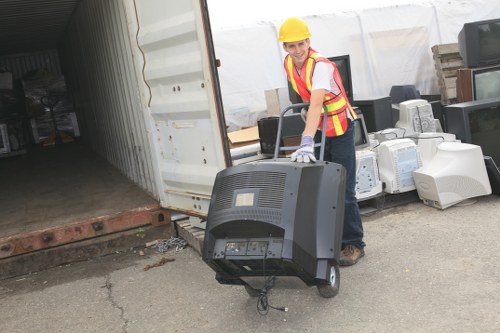
Quotation details for an office clearance normally depend on the volume of material, the type of furniture or contents involved, how easy it is to reach them and whether any dismantling is needed before removal. Access factors can matter just as much as item count, especially in offices above ground level, in shared buildings or in premises with limited loading time. If a room is densely furnished, or if several areas are being cleared in one visit, those details help establish a more accurate scope.
There is no single formula that fits every office, which is why it helps to describe the space plainly rather than assume that it is the same as another premises. A reception area, a meeting suite and a back office may each present different practical requirements. If some items are kept for reuse, or if the clearance needs to be split into phases, that should be mentioned at the outset. Good quotes come from clear facts, not from general descriptions alone.
About Bounds Green
Bounds Green is a North London district associated with the London Borough of Haringey and centred on the area around Bounds Green Underground station on the Piccadilly line. It sits close to the boundary with nearby areas such as Wood Green, Bowes Park and Alexandra Palace, and its character reflects a long suburban evolution from earlier settlement patterns into a dense, interwoven residential and transport-led neighbourhood. The name itself is widely used for both the local station and the surrounding district, which helps define how people orient themselves within this part of north London. The area is mainly known for its streets of late Victorian and early twentieth-century housing, together with later infill and smaller commercial stretches that line the main roads. Bounds Green Road is one of the clearest local routes, while the railway and Underground links have helped tie the district into the wider city for many decades. Nearby green and open spaces contribute to the local character, including access to Alexandra Park and the broader parkland landscape associated with Alexandra Palace, which sits to the west and is one of the best-known landmarks in the wider district. The area also connects into the history of the former Middlesex suburban fringe, where transport improvements and housing growth shaped the street pattern and created the mixed urban grain visible today. Everyday life in Bounds Green is therefore marked by a combination of residential streets, local shopping frontages, commuter movement and access to larger nearby cultural and leisure destinations. The result is a neighbourhood that feels distinctly London, but with a clear local identity shaped by its station, roads and surrounding housing stock.
Commercial clearances for changing workplaces
Office clearances are often linked to change: a move, a redesign, a downsizing, a lease end or a workspace that is being refreshed for a new use. In each case, the service has to do more than simply lift items out. It needs to respect the order of operations so that essential assets are not removed too early and the remaining space can still be used safely. That is why we place emphasis on practical planning and a sensible sequence of work rather than speed alone.
In some offices, the clearance is focused on a single department or a few surplus rooms. In others, the task covers a whole premises with multiple zones, each containing different furniture and contents. When that happens, a phased approach is often the easiest to manage, because it allows the work to move from room to room without losing track of what has already been cleared. It also gives the customer a clearer view of progress and remaining priorities.
For businesses that need to keep operations moving during the process, timing and access become part of the service itself. A careful clearance can be arranged around opening hours, tenancy restrictions or internal handover schedules, provided the scope has been agreed in advance. If your premises need to stay orderly until the final removal, it is best to map out the sequence early and keep the essential items separated from the rest.
Office items, reuse and responsible disposal

Not every item from an office clearance needs the same treatment. Some furniture may be suitable for reuse, while other contents will be more appropriate for disposal through the correct waste route. A sensible office clearance distinguishes between these outcomes where possible, because it helps avoid unnecessary handling and supports a more orderly removal. Items that are still in usable condition may be treated differently from worn, damaged or obsolete pieces that have reached the end of their working life.
This is particularly relevant when an office contains a mixture of older furniture, newer workstations and accumulated contents from different periods of use. The clearance can then be organised around categories rather than treated as a single pile of material. That approach is helpful for customers who want a practical service that recognises the difference between what can still serve a purpose and what should be taken away. It also keeps the process clearer if there are several stakeholders involved in the decision.
If you are looking at an office clearance in Bounds Green and want to arrange the next step, the simplest way to move forward is to outline the rooms, the items to be removed and any access notes that may affect the work. You can then request a quotation with confidence and compare it on a like-for-like basis. Get in touch to ask for a quote and we can discuss the scope in plain terms.
Booking the right office clearance
Choosing an office clearance service is usually easier when you can match the provider to the actual scope of work. A compact clearance of spare chairs and a few cupboards is not the same as a full strip-out of several rooms, so it helps to be specific. Look at what needs removing, whether items have to be dismantled, and whether the building layout presents any constraints. The more accurately the job is described, the easier it is to plan and price in a realistic way.
Another useful point is whether the clearance needs to happen all at once or can be divided into stages. Some customers want everything removed in a single visit, while others prefer to clear one area, check what remains and then continue. Both approaches can work, but they have different implications for planning and access. When the scope is properly set out, the work can be organised around the space rather than forcing the space to fit the work.
We aim to keep office clearance simple, practical and suitable for commercial premises that need a tidy result without unnecessary complication. If you are ready to discuss your own clearance in Bounds Green, use the details you already have to describe the room or rooms involved, and ask for a quotation that reflects the actual job. Request a quotation today.