Where to Dump Large Rubbish in N11: Local Disposal Guide
If you live in N11 and need rid of a sofa, bed frame, wardrobe, old carpet, or a heap of renovation waste, the question is usually the same: where can you dump large rubbish without wasting a day doing it? The answer depends on what the item is, how much you have, and how quickly you need it gone. This guide breaks down the practical options for bulky waste disposal in N11, what to avoid, and how to choose the most sensible route for your home, flat, landlord property, or business.
You will also find a clear step-by-step process, a comparison of disposal methods, and a checklist you can use before booking anything. If you want a simple, reliable route, a professional waste removal service is often the fastest way to handle awkward, heavy, or mixed large items without turning your week upside down.
Table of Contents
- Why it matters
- How local large rubbish disposal works
- Key benefits and practical advantages
- Who this is for and when it makes sense
- Step-by-step guidance
- Expert tips for better results
- Common mistakes to avoid
- Tools, resources and recommendations
- Law, compliance, standards and best practice
- Options and comparison table
- Case study or real-world example
- Practical checklist
- Conclusion
- Frequently asked questions
Why Where to Dump Large Rubbish in N11: Local Disposal Guide Matters
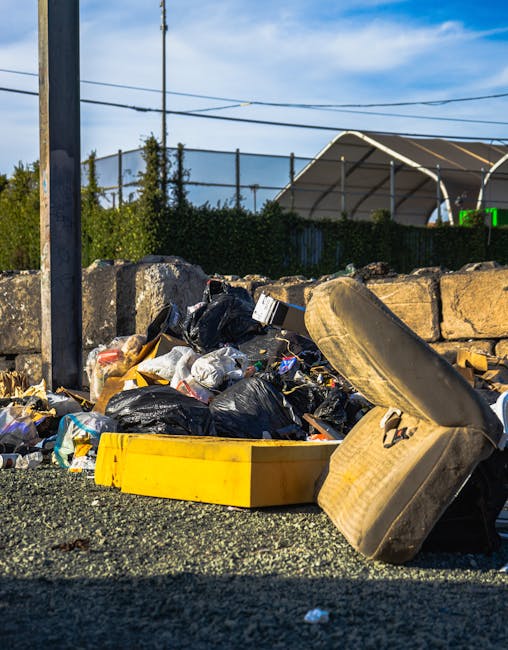
Large rubbish is not the same as a bag of household waste. A broken wardrobe, mattress, exercise bike, old chest freezer, or builders' offcuts can be hard to move, difficult to fit in a car, and awkward to dispose of legally. In a busy area like N11, the wrong choice can mean missed collection slots, rejected items, parking problems, or an unexpected trip that costs more time and energy than the item is worth.
There is also a real compliance angle. Bulky items should not be left beside shared bins, dumped in a communal stairwell, or abandoned on the street. That creates hazards, blocks access, and can lead to fly-tipping issues. If the waste includes furniture, mixed household debris, or light construction waste, it is worth thinking ahead rather than trying to improvise on the day.
The practical aim is simple: get the item removed safely, legally, and with as little disruption as possible. For many residents, that means comparing the local council route, a trip to an authorised facility, reuse or donation where suitable, or a booked clearance team. If the load includes furniture, a dedicated furniture disposal option may be more efficient than trying to separate and transport everything yourself.
Expert summary: For bulky waste in N11, the best option is usually the one that matches the item size, urgency, lifting effort, and disposal rules - not simply the cheapest headline price.
How Where to Dump Large Rubbish in N11: Local Disposal Guide Works
In practice, large rubbish disposal usually falls into a few categories. First, there is council or civic amenity disposal, where accepted items can be taken to an authorised site or collected through a local booking system. Second, there is reuse, resale, or donation for items still in usable condition. Third, there is private clearance, where a team removes the items from your property and takes them for sorting, recycling, or responsible disposal.
What matters most is the type of waste. A sofa is different from plasterboard. Garden furniture is different from a broken cabinet. White goods, mattresses, wood, metal, electricals, and rubble often need different handling. That is why people often underestimate the time involved. The item may look simple, but the disposal route may not be.
If you are dealing with a house clearance, a loft clear-out, or a garage that has quietly become a storage unit, a broader service can be useful. For example, a house clearance or garage clearance can deal with mixed items in one visit rather than forcing you to sort every object individually.
In N11, the most sensible workflow usually looks like this:
- Identify the large items and group them by material or type.
- Check whether anything can be reused, donated, or sold.
- Confirm whether the remainder is suitable for council collection, a drop-off site, or private removal.
- Measure access routes such as stairs, lifts, alleyways, and parking space.
- Choose the disposal method that fits your timeline, budget, and lifting ability.
That sounds obvious, but it saves a surprising amount of hassle. The tricky bit is often not the disposal itself; it is the lifting, carrying, and transport. Anyone who has tried to wrestle a double wardrobe through a narrow hallway will know the feeling.
Key Benefits and Practical Advantages
Choosing the right route for bulky rubbish disposal in N11 is about more than just getting rid of clutter. Done properly, it reduces stress, improves safety, and makes your home or workplace easier to use again. For landlords, it can speed up re-letting. For families, it can free up valuable space. For businesses, it can help keep premises tidy and presentable.
Here are the main advantages people tend to notice:
- Less physical strain: heavy lifting is one of the most common reasons people delay disposal.
- Cleaner access: removing large items opens hallways, garages, lofts, and storage spaces.
- Better time control: a booked collection often suits busy schedules better than a self-haul trip.
- Improved safety: fewer trip hazards, sharp edges, and obstructions around the property.
- More flexible handling: mixed loads can often be sorted and taken away in one go.
There is also an environmental benefit when items are handled properly. Reuse and recycling should be considered before disposal where possible. If sustainability matters to you, it is worth looking at a provider's approach to sorting and recovery, such as the guidance in their recycling and sustainability information.
Another advantage that is easy to overlook: fewer errors. When rubbish sits around for too long, people start adding to it. One old sofa becomes a sofa, a rug, two broken chairs, and the remains of a shelf. That is how a small job becomes a full clearance.
Who This Is For and When It Makes Sense
This guide is useful for a wide range of N11 residents and property managers. You may need bulky waste disposal if you are:
- moving house and need to clear old furniture before handover;
- renovating a room and replacing a bed, wardrobe, or carpet;
- emptying a flat after a tenancy ends;
- clearing a loft, garage, or basement full of forgotten items;
- dealing with a garden tidy-up that includes large branches, broken planters, or old outdoor furniture;
- disposing of office furniture or equipment after a workplace change;
- handling builders' offcuts from a DIY project;
- supporting an elderly relative or family member with a long-overdue clear-out.
It also makes sense when the job is simple in theory but awkward in practice. For example, a single heavy sofa can be harder to move than five lighter bags of rubbish. A mattress in a top-floor flat might need two people and careful manoeuvring just to get it out of the building. In those cases, the value of a managed collection becomes obvious pretty quickly.
For property owners and landlords, it can be more efficient to combine waste streams. If you are dealing with a mixed clear-out, services such as flat clearance, home clearance, or even furniture clearance may fit better than item-by-item disposal.
Step-by-Step Guidance
If you want a practical route through the problem, follow this process. It keeps the job manageable and helps you avoid wasted trips or last-minute confusion.
- Sort the items. Separate furniture, electricals, wood, metal, garden waste, rubble, and general mixed rubbish. One mixed pile can hide several disposal rules.
- Check what can be reused. Good-condition furniture, appliances, or fixtures may be suitable for resale, donation, or rehome use.
- Measure access. Note stair width, lift size, doorway clearance, and parking distance. This matters more than people think.
- Decide the route. Choose council collection, self-haul, or a private clearance service based on speed, volume, and lifting needs.
- Confirm item restrictions. Some sites and collections do not accept certain materials or may require items to be separated.
- Prepare the load. Remove small loose items, detach legs where sensible, and group similar materials together.
- Book or travel. If using a collection service, make sure access and timing are confirmed. If transporting yourself, plan the safest route and vehicle space.
- Keep paperwork or confirmations. Save booking details, quote information, or waste transfer records where appropriate.
A useful habit is to photograph the items before booking. It helps providers understand the size, volume, and access issues, and it can prevent the common "that looked smaller in my head" moment.
If you are clearing an outbuilding or catch-all storage space, a dedicated loft clearance service or a broader waste visit may be the cleanest route, especially when the items are dusty, bulky, and difficult to carry down stairs.
Expert Tips for Better Results
There are a few small decisions that make a large difference. The first is to avoid waiting until the pile is at breaking point. If you deal with bulky rubbish early, you tend to save space, reduce risk, and keep costs more predictable.
Second, think in terms of access, not just item count. Two large wardrobes in a narrow terrace can be more difficult than ten smaller items in a ground-floor property. Good providers will want to know about stairs, parking, and whether the item needs to be taken through a shared entrance or tight hallway.
Third, separate anything that has a different handling requirement. Mattresses, electronics, builders' rubble, and green waste should not all be treated as if they are the same thing. If your load includes renovation debris, a specialist builders waste clearance service is often more appropriate than a general rubbish run.
Fourth, ask about what happens after collection. A professional provider should be able to explain whether items are reused, recycled, or sent for disposal in line with standard practice. That does not mean every item can be saved, but it does mean the process is transparent.
Finally, be realistic about lifting. A large item can be deceptively heavy, badly balanced, or awkwardly shaped. If you are unsure, treat that as useful information, not a challenge. Safety first is not just a slogan; it is how you avoid a damaged wall, a strained back, or a wasted afternoon.
Common Mistakes to Avoid
Most problems with bulky rubbish disposal come from rushing. The item itself is not usually the issue. The mistake is trying to move, book, or dump it without a proper plan.
- Leaving items outside illegally: this can create a fly-tipping issue and make the problem worse.
- Booking the wrong service: not every provider handles all item types, especially mixed or heavy waste.
- Underestimating access: stairs, lifts, parking, and door widths can affect whether removal is straightforward.
- Mixing restricted materials: some waste needs separate handling, so check before loading everything together.
- Forgetting reusable value: a piece of furniture that still has life in it may be worth passing on rather than disposing of immediately.
- Choosing only on price: the lowest quote is not always the best value if it creates delays or excludes the lifting work you actually need.
A lot of frustration comes from surprise add-ons, unclear expectations, or hidden assumptions about what is included. That is why reading the provider's terms and conditions is worth the few minutes it takes. Nobody enjoys legal fine print, but it is better than a misunderstanding on collection day.
Tools, Resources and Recommendations
You do not need specialist equipment for every job, but a few basics make life easier. A tape measure, gloves, a torch for lofts or sheds, a sack trolley for manageable loads, and strong bin bags for loose fragments can all help. For awkward furniture, removal straps and basic door protection can prevent damage.
For deciding the right route, these are the most useful resources to consider:
- Item list: write down exactly what needs removing.
- Photo set: take clear pictures of each item and the access route.
- Space plan: note where the waste is currently stored and how it will be carried out.
- Collection notes: keep track of any restrictions or timing rules.
- Quote request: ask for a clear estimate based on the actual volume and access conditions.
If you need a more structured service for a business premises, a dedicated business waste removal option or an office clearance can keep disruption low while making sure items are handled properly. That is especially helpful when bulky waste is only part of a larger clean-up.
For pricing clarity, it helps to review pricing and quotes information before you book. A good quote should reflect the volume, item type, access, and any special handling needs.
Law, Compliance, Standards, and Best Practice
For large rubbish disposal in the UK, the safest approach is to use an authorised route and avoid anything that could be classed as dumping or unlawful disposal. You do not need to be a waste expert to make a sensible choice, but you should be cautious about handing waste to anyone who cannot explain where it goes or how it is processed.
As a general best practice, use licensed or reputable services, keep evidence of collection or transfer where relevant, and separate waste streams where possible. This is particularly important for business users and landlords, who may have extra obligations around record keeping and duty of care. If you are unsure, ask questions before the booking is confirmed.
Health and safety also matter. Heavy lifting, sharp edges, broken glass, nails, and unstable stacks can all create avoidable risks. A provider with clear safety procedures is usually a better choice than one that treats every job as a quick lift-and-go. If you want reassurance about how a company approaches on-site safety, take a look at its health and safety policy and insurance and safety information.
Trust signals matter too. A transparent business should make it easy to find contact details, service boundaries, privacy information, and complaint handling routes. You can check the company background on the about us page and use the contact page if you need a specific answer before booking.
Options, Methods, or Comparison Table
Below is a practical comparison of the most common ways to deal with bulky rubbish in N11. The best choice depends on urgency, volume, access, and how much lifting you want to do yourself.
| Method | Best for | Pros | Watch out for |
|---|---|---|---|
| Reuse, donate, or resell | Items in usable condition | Low cost, environmentally sensible, good for quality furniture | Time needed to arrange, collection uncertainty, not suitable for damaged items |
| Self-haul to an authorised facility | People with a suitable vehicle and free time | Direct control, useful for smaller loads, may suit mixed household items | Lifting effort, access limits, transport risk, possible restrictions on item types |
| Council or local bulky waste route | Residents with acceptable items and flexible timing | Simple if available, official disposal route | Collection windows, item limits, booking availability, preparation requirements |
| Private waste clearance | Heavy, mixed, urgent, or awkward items | Fast, minimal lifting for the customer, suitable for larger volumes | Cost varies by load size and access, service quality differs between providers |
For many N11 households, the private clearance route wins on convenience. For a single light item, self-haul or reuse may be enough. For a full room of old furniture, a domestic clearance service is usually far easier than trying to manage it piecemeal.
If the items are mainly old household furniture, a more targeted furniture clearance can be the sweet spot: faster than DIY, simpler than a full house removal, and better matched to bulky pieces.
Case Study or Real-World Example
Consider a typical N11 scenario: a couple is replacing a bed, two wardrobes, a broken desk, and a mattress after a move. The items are too large for a normal car, and the flat is on an upper floor with a narrow staircase. In theory, they could dismantle everything, transport it in several trips, and figure out a disposal location themselves. In practice, that would take most of a day and involve heavy lifting in a shared building.
Instead, they sort the items by type, check what can be reused, and book a collection that handles furniture and mixed waste together. The provider confirms access details, arrives with the right vehicle and lifting equipment, and removes the load in one visit. The result is not just less clutter. It is less stress, less risk of damage, and no awkward pile sitting in the hallway for another week.
That is the real value of using a structured disposal plan. The job becomes predictable. And when a job is predictable, it is much easier to get it done.
This same logic applies to seasonal clear-outs. If your shed, garden corner, or rear alley has become a holding area for broken items, a dedicated garden clearance or a broader home clearance can restore space without the constant stop-start of DIY disposal.
Practical Checklist
Use this before you book or travel with large rubbish:
- List every item you need removed.
- Separate furniture, electricals, rubble, green waste, and mixed rubbish.
- Check whether anything can be reused or donated.
- Measure doors, stairs, lifts, and parking access.
- Confirm whether the waste is suitable for council, self-haul, or private collection.
- Ask about any item restrictions or preparation requirements.
- Take photos of the load and access route.
- Keep the booking confirmation, quote, or receipt.
- Make sure the route is clear on collection day.
- Choose the option that saves the most time and lifting, not just the most money on paper.
Small preparation can make a big difference. A ten-minute check often prevents a one-hour delay.
Conclusion
Finding where to dump large rubbish in N11 is really about choosing the right disposal route for the item in front of you. Some things are worth reusing. Some can be taken away through an official route. Others are better handled by a professional clearance team, especially when they are heavy, bulky, mixed, or awkward to move.
If you want the simplest outcome, focus on three things: what the item is, how easy it is to move, and how quickly you need it gone. That combination usually points you to the best solution.
For residents, landlords, and businesses who want a straightforward, reliable option, it often makes sense to use a service that can manage collection, sorting, and responsible disposal in one process. If you are ready to clear space and avoid the usual hassle, the next step is easy.
Get a free quote today and see how much you can save.
Frequently Asked Questions
Can I leave large rubbish beside the bins in N11?
Usually, no. Leaving bulky waste beside communal bins or on the street can create a nuisance and may be treated as unlawful dumping. It is better to use an authorised disposal route or arrange collection.
What counts as large rubbish?
Large rubbish usually means bulky household items that are awkward to carry or too big for normal bins, such as sofas, beds, wardrobes, mattresses, tables, and similar items.
Is it cheaper to dump large rubbish myself?
Sometimes, but not always. Self-haul can be economical if you already have a suitable vehicle and enough time. Once you factor in lifting, fuel, parking, and multiple trips, a collection service may offer better overall value.
What if my items are still in good condition?
If they are usable, consider donation, resale, or reuse first. That can be the most economical and environmentally sensible option, especially for furniture and household goods.
Do I need to dismantle furniture before disposal?
Not always. Dismantling can help with access, but many clearance services can remove items whole if the route allows it. If access is tight, breaking down furniture may make the job easier.
Can a clearance service take mixed waste?
Often yes, provided the items are allowed and clearly described in advance. Mixed loads are common in house clear-outs, garage clearances, and renovation jobs.
What should I do with broken electrical items?
Electrical items usually need separate handling from general rubbish. Check how they should be disposed of before including them in a bulky waste load.
How do I prepare for a bulky waste collection?
Clear access routes, identify all items, separate different waste types, and make sure parking or entry arrangements are understood before the collection day.
Can I use a service for a full flat clear-out?
Yes. If you are clearing multiple rooms or dealing with a tenancy change, a flat clearance or broader clearance service is often the most practical option.
How do I know a waste provider is trustworthy?
Look for clear contact details, transparent pricing, published policy pages, and sensible explanations of what happens to the waste. A trustworthy company should be happy to answer questions before booking.
What if I only have one very heavy item?
That is still a good reason to use a collection service. One awkward item can be harder than a small pile of lighter waste, especially if there are stairs or narrow doorways involved.
Is a quote usually based on weight or volume?
It can vary by provider, but bulk waste quotations are often influenced by the amount of space the load takes up, the item type, access, and how much handling is required.
Where can I ask more questions before booking?
You can review service details and contact the team through the website's contact page if you need clarification on items, access, or timing before you commit.
For businesses, landlords, or homeowners dealing with a bigger clear-out, it may also help to review the provider's wider service pages, including house clearance and business waste removal, to choose the best fit for the job.