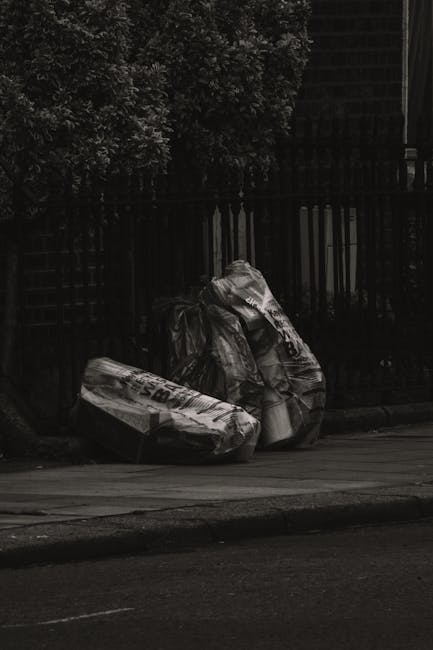
Haringey Council rules for bulky waste in Bounds Green: a practical guide for residents and local businesses
If you are dealing with an old sofa, a broken wardrobe, a mattress that has seen better days, or a pile of awkward household clutter, the Haringey Council rules for bulky waste in Bounds Green can feel a bit unclear at first. Fair enough. Most people only look into it when they suddenly need something gone, and by then they want a simple answer, not a maze of terms and conditions.
This guide breaks the subject down in plain English. You will learn how bulky waste is normally handled, what to check before booking a collection, which items tend to cause problems, and when a private clearance option may be the smoother route. We will also cover common mistakes, compliance basics, and practical ways to keep the whole job tidy, legal, and less stressful than it sounds.
Table of Contents
- Why Haringey Council rules for bulky waste in Bounds Green Matters
- How Haringey Council rules for bulky waste in Bounds Green Works
- Key Benefits and Practical Advantages
- Who This Is For and When It Makes Sense
- Step-by-Step Guidance
- Expert Tips for Better Results
- Common Mistakes to Avoid
- Tools, Resources and Recommendations
- Law, Compliance, Standards, or Best Practice
- Options, Methods, or Comparison Table
- Case Study or Real-World Example
- Practical Checklist
- Conclusion
- Frequently Asked Questions
Why Haringey Council rules for bulky waste in Bounds Green Matters
Bulky waste is not just "big rubbish". In practical terms, it usually means larger household items that do not fit in normal bins or standard collection rounds. Think beds, sofas, bookcases, fridges, tables, filing cabinets, and other awkward things that need a bit of planning to move safely. In Bounds Green, that planning matters because the wrong approach can lead to missed collections, items being left on the pavement, or unnecessary extra costs.
There is also a wider neighbourhood issue. Bounds Green has plenty of streets where access is tight, parking is limited, and front gardens are small or non-existent. That makes bulky waste logistics a real-world problem, not just a paperwork one. If you have ever tried carrying a broken chest of drawers down a narrow hallway while the lift is out of order, you will know exactly what I mean. Not fun. Not even slightly.
Following the correct council process helps with three things at once: it keeps the street clear, reduces fly-tipping risk, and gives you a lawful route for disposal. It also helps you decide whether council collection is the best fit or whether a private waste removal or specialised clearance service is the better option for the job in hand.
Expert summary: The cleanest approach is to identify the item category first, check access and collection rules second, and only then decide whether council collection or a private clearance team will be the least stressful choice.
How Haringey Council rules for bulky waste in Bounds Green Works
While exact council procedures can change over time, the general structure is usually familiar across London boroughs. You normally need to book a collection in advance, specify what you want removed, and make sure the items are placed where the crew can safely access them. That last bit sounds obvious, but it is where many collections go wrong.
Here is the practical reality: bulky waste collections are typically intended for domestic items only, not general builders' rubble, loose mixed waste, or commercial waste from business premises. If your load is a bit mixed, or includes furniture plus renovation leftovers, it may need separating before collection. That is one reason some people choose a service like furniture clearance or builders waste clearance instead of trying to force everything into one council pickup.
The most important things to understand are:
- Collections are usually booked in advance, not on demand.
- There may be limits on the number, size, or type of items accepted.
- Items often need to be ready at the agreed collection point.
- Some items, especially hazardous or electrical items, may follow separate rules.
- Missed access, overfilled collections, or incorrect item descriptions can cause delays.
For Bounds Green residents, the day-to-day issue is often access rather than waste volume. A bulky item at the back of a top-floor flat is a very different job from two chairs left just inside a front doorway. Truth be told, access changes everything.
If you are clearing a whole room rather than one object, a more comprehensive approach can make life easier. A home clearance or flat clearance can be much more efficient when several bulky items are involved and you want everything handled in one go.
Key Benefits and Practical Advantages
Following the proper bulky waste route is not just about staying on the right side of local rules. It also gives you a few practical advantages that are easy to overlook when you are staring at a spare room full of old furniture.
1. Less stress on collection day
You know what is being taken, when it is being taken, and where it needs to be left. That reduces last-minute panic and keeps your day moving.
2. Lower chance of rejected waste
When you understand the item rules, you are less likely to place the wrong thing out for collection. Rejected waste is annoying, especially if you have already carried it downstairs once.
3. Better protection against fly-tipping problems
Leaving bulky items in the wrong place, even temporarily, can create an eyesore and sometimes a liability. A proper collection or clearance helps you avoid that messy in-between stage.
4. Safer handling of heavy items
Large objects can trap fingers, scratch walls, and cause lifting injuries if handled badly. Using the right method means fewer bumps, bruises, and muttered swear words under your breath.
5. Cleaner sorting for recycling and reuse
Many bulky items can be sorted for material recovery, resale, or reuse. If sustainability matters to you, this is worth factoring in. A service with a clear recycling focus, such as recycling and sustainability, can support a more responsible outcome.
And there is a quieter benefit too: once bulky waste is gone, a room starts to feel like a room again. You can hear that small echo when you step inside. It sounds trivial until you have lived with clutter for weeks.
Who This Is For and When It Makes Sense
This guide is useful if you are in Bounds Green and any of the following sound familiar:
- You are replacing a sofa, bed, mattress, or wardrobe.
- You are clearing a loft, garage, or shed full of large items.
- You are moving out of a flat and need bulky items gone quickly.
- You are helping a relative downsize and there is a mix of furniture to remove.
- You run a small business and need to clear office furniture or mixed contents.
- You have renovation waste and a few bulky items in the same property.
For businesses, bulky waste can become a bit more complicated because domestic council routes may not be the right fit. If the waste is connected to a workplace, it is often better to look at business waste removal or a dedicated office clearance solution instead.
For landlords and letting agents, timing is usually the deciding factor. If a property needs to be turned around quickly, one bulky item may be enough reason to book a wider clearance rather than wait for multiple small collections.
Step-by-Step Guidance
If you want the smoothest possible process, start with a simple system. It does not need to be fancy. Just practical.
Step 1: List every item you need removed
Write it all down. A sofa, two armchairs, one broken chest of drawers, one mattress, one broken table lamp. Be honest about the number of items and their condition. If you forget something now, it tends to become a problem later.
Step 2: Separate bulky waste from other waste streams
Keep furniture, garden waste, builders' debris, electricals, and general rubbish apart if possible. This helps you choose the right route. For example, garden materials may fit better with garden clearance, while loft contents may be better handled through loft clearance.
Step 3: Check access carefully
Measure doorways, stairwells, and lift access if you live in a flat or maisonette. Look out for tight corners, low railings, or narrow communal hallways. In Bounds Green, a lot of the practical challenge is simply getting the item out without damaging walls or blocking neighbours. Annoying, but manageable if you prepare.
Step 4: Decide whether council booking or private clearance is better
If you have a small number of standard household items and you are happy to follow the council process, a bulky waste booking may be enough. If you want speed, more flexibility, or multiple item types removed together, a private service may be easier. You can compare that against a broader house clearance or targeted furniture disposal option.
Step 5: Prepare the items for collection
Empty drawers if requested, remove personal belongings, and make sure paths are clear. If something needs dismantling to leave safely, do that beforehand if you can do it without risk.
Step 6: Place items at the agreed point
Where you leave the waste matters. Make sure it is exactly where the crew expects it. A collection can be delayed if the items are hidden behind a gate, inside a property, or left in a locked communal area without arrangements.
Step 7: Keep proof of what was collected
If the job is complex or includes several loads, a written note or confirmation message helps. It is a small thing, but it can save a lot of back-and-forth if anything is questioned later.
Expert Tips for Better Results
People often think bulky waste is mostly a lifting job. In practice, it is more of a planning job. The lifting is just the final bit.
- Bundle similar items together. Sofas with sofas, wood with wood, electrical items separately where required. This makes sorting faster and less error-prone.
- Take photos before booking. Photos help clarify quantity and access. A two-minute snapshot can stop a lot of misunderstandings.
- Think about sequence. If you are clearing a room, remove the easy items first so the heavy ones have space to move.
- Don't underestimate the staircase. A piece that looks manageable in a room can become a nightmare on a narrow landing. Happens all the time.
- Ask about reuse where appropriate. Good-condition items may be suitable for reuse or resale rather than disposal.
One practical trick is to do a "walk-back" the night before. Stand at the collection point and imagine carrying each item out. If something feels awkward, it probably is. That little rehearsal often reveals the snag before the crew arrives.
If your bulky waste is part of a garage or storage clear-out, a garage clearance can be a helpful middle ground. It keeps the job focused without turning into a full-property upheaval.
Common Mistakes to Avoid
Most problems are avoidable. The frustrating part is that the avoidable bits are usually the ones people only notice afterwards.
Leaving items in the wrong place
If a collection point is specified, stick to it. Putting waste in the wrong area can create access issues or nuisance complaints from neighbours.
Mixing prohibited items with standard bulky waste
Some items need separate handling. Putting everything together is tempting, but it can cause the whole lot to be refused or delayed.
Guessing the item count
Saying "a few things" does not help much if you are actually clearing ten bulky items and a dismantled bed frame. Be precise.
Forgetting about flat access
Communal doors, lift times, parking restrictions, and noise considerations all matter. A quick collection can turn awkward if access has not been thought through.
Waiting until the last minute
Let's face it, we all do this sometimes. But leaving a bulky item until move-out day is a reliable way to create stress you did not need.
Assuming every service handles every item
Not every provider will take the same categories. A service for furniture clearance may be ideal for household furnishings but less suitable for heavy mixed rubble or specialist waste.
Tools, Resources and Recommendations
You do not need much to organise bulky waste well, but a few simple tools make a surprising difference.
- Tape measure: useful for doors, hallways, and furniture dimensions.
- Phone camera: take clear photos of items and access routes.
- Notebook or checklist: keep track of everything being removed.
- Label tape or sticky notes: mark items if several people are involved.
- Gloves and sturdy footwear: basic, but worth it if you are helping move items.
For readers who want a more complete service rather than a one-off collection, the following pages may help you compare your options:
- home clearance for whole-property jobs
- house clearance for fuller domestic clear-outs
- flat clearance for smaller homes and upstairs access
- furniture disposal when the main issue is outdated or damaged furniture
- pricing and quotes if you want to compare costs before committing
There is also value in checking company policies if you are choosing a private provider. Pages such as health and safety policy, insurance and safety, and terms and conditions give you a better sense of how responsibly a provider works.
Law, Compliance, Standards, or Best Practice
Bulky waste handling in the UK sits within a broader framework of waste duty, safe handling, and responsible disposal. You do not need to be a legal expert to do it properly, but you should understand the basics.
The safest rule of thumb is simple: waste should be stored, moved, and disposed of without causing danger, nuisance, or illegal dumping. If you are arranging removal, make sure the route you choose is legitimate and the items are handled responsibly. That matters whether you are a tenant, homeowner, landlord, or business owner.
For households, the key best-practice points are:
- Only present the items you have arranged to dispose of.
- Do not block pavements, exits, or shared entrances.
- Keep sharp or broken items secured.
- Separate electricals or specialist waste where required.
- Use a responsible carrier for any private clearance.
For businesses, the stakes are a little higher. Commercial waste needs proper handling and may involve record-keeping, contract clarity, and more careful segregation. If in doubt, use a dedicated business route rather than assuming a domestic-style collection will do the job.
Best practice is not glamorous, but it is what saves you hassle later. A well-run collection is the one nobody has to think about again.
Options, Methods, or Comparison Table
If you are deciding how to deal with bulky waste in Bounds Green, these are the three common routes people tend to compare.
| Option | Best for | Advantages | Limitations |
|---|---|---|---|
| Haringey Council bulky waste collection | Small to moderate domestic bulky items | Official route, straightforward for eligible household items | May require advance booking, item limits, and strict presentation rules |
| Private bulky waste or furniture clearance | Faster turnarounds, mixed items, awkward access, larger volumes | Flexible timing, broader item handling, less DIY lifting | Cost varies by load size, access, and item type |
| Full property clearance | Lofts, garages, rentals, downsizing, bereavement clear-outs | Most efficient for larger jobs, can combine multiple waste streams | May be more than you need for a single item |
If your job is just one chair and a mattress, council collection may be enough. If you are clearing a room, a flat, or multiple bulky items plus general contents, a broader clearance is often calmer and, in many cases, more cost-effective overall.
Case Study or Real-World Example
A common Bounds Green scenario goes something like this. A couple are moving out of a first-floor flat near a busy road. They have an old sofa, a broken bed base, two wardrobes, and a couple of mismatched chairs. They start by thinking, "We'll just put it out for collection." Then they realise the wardrobes do not fit down the hallway unless partially dismantled, and the lift is too small for one of the larger pieces.
At that point, the job becomes less about disposal and more about coordination. They separate what can be moved easily, photograph the items, check access, and decide whether a council collection is enough. In the end, a combination of furniture disposal and a broader flat clearance makes more sense than trying to force everything into one ad hoc pickup.
The difference is not just convenience. It saves time, avoids damage to walls and doors, and means the move-out day is not dominated by one last stressful obstacle. That is often the real win, honestly.
Another very typical case is a garage in a terraced house. There may only be a few bulky items, but they are awkward: a heavy cabinet, a broken exercise bike, old shelving, and some mixed bits tucked behind boxes. Here, a targeted garage clearance can work far better than attempting repeated small trips to a collection point.
Practical Checklist
Use this checklist before arranging bulky waste removal in Bounds Green:
- Have I listed every item accurately?
- Have I separated bulky waste from general rubbish?
- Do I know whether any item needs special handling?
- Have I checked access, parking, and stairway width?
- Have I decided between council collection and private clearance?
- Have I removed personal items from furniture and drawers?
- Are pathways clear and safe for lifting?
- Do I have photos in case I need to confirm the job details?
- Have I checked the provider's policies if using a private service?
- Do I know exactly where the items will be left for collection?
If you can tick all ten, you are in a very strong position. If not, no drama. Fix the gaps first, then book.
Conclusion
Haringey Council rules for bulky waste in Bounds Green are easiest to deal with when you think in practical steps: identify the items, separate them properly, check access, and choose the right removal route for the job. A small collection can often be handled through the council process. A bigger, mixed, or awkward job may be better served by a flexible private clearance.
What matters most is not doing it the hard way. Once you have the right plan, bulky waste stops being a nagging problem in the corner of the room and becomes just another task finished properly.
If you want a simple, tidy next step, take a moment to compare your options and choose the route that fits your access, your timeline, and the type of items you need gone. The calmest solution is usually the one that saves you from lifting something twice.
Get a free quote today and see how much you can save.
Frequently Asked Questions
What counts as bulky waste in Bounds Green?
Bulky waste usually means large household items that will not fit in normal bins, such as sofas, beds, wardrobes, tables, and similar items. Exact acceptance rules can vary by collection method, so it is worth checking item type and size before booking.
Can I put bulky waste on the pavement outside my home?
No, not unless the collection has been arranged and the items are placed exactly as instructed. Leaving items out informally can create nuisance, access problems, and the risk of the waste being treated as fly-tipping.
Do council bulky waste collections take mattresses and sofas?
Often they do, but the rules can differ depending on booking terms, item condition, and whether the item is domestic waste. Always confirm the exact item list before putting anything out.
What should I do if my bulky items are in a flat with narrow stairs?
Measure access first and think carefully about whether the items can be moved safely. If the route is awkward, a flat clearance service may be easier than a standard collection.
Is private bulky waste removal better than council collection?
It depends on your situation. Council collection can be suitable for a few standard items, while private removal is often better for speed, mixed contents, or difficult access. The "best" option is the one that fits the job properly.
Can I mix furniture with garden waste or builders' waste?
Sometimes, but mixed loads can complicate collection. Furniture, garden material, and builders' debris are often better separated so the correct service can be used for each stream.
What if I only need one item removed?
For a single item, a council bulky waste booking may be enough. If the item is heavy, awkward, or hard to access, a private collection might still be the simpler option.
How do I know if my item needs special handling?
If the item is electrical, contains fluids, is damaged in a way that makes it unsafe, or does not fit normal bulky waste categories, it may need separate handling. When in doubt, ask before collection day.
Can businesses use the same bulky waste route as households?
Usually not. Commercial waste often needs a business-specific removal route rather than a domestic bulky waste collection. A dedicated business waste service is often the safer choice.
What information should I prepare before booking removal?
Prepare the item list, access details, approximate quantity, and any relevant photos. That is usually enough for a provider to understand the job and avoid surprises.
How do I avoid missed or rejected collections?
Be precise about item type and quantity, make sure the waste is in the correct location, and check whether any items are excluded. Most missed collections happen because of access issues or unclear instructions.
Where can I compare clearance services for larger jobs?
If you need more than a standard bulky waste pickup, comparing pricing and quotes alongside service pages such as house clearance, home clearance, and waste removal can help you choose the most practical route.
If you are still unsure which route suits your property, start with the items themselves and work backwards. That usually makes the answer much clearer, and a lot less stressful too.